
Labour shouldn’t put polling ahead of child poverty
Adam Drummond on what the government should and shouldn't take from polling on benefits

The arguments for the two-child benefit cap are that a) the government can’t afford to get rid of it and b) that it polls well.
The former is a more complicated question about the cost of longer term secondary effects and how much more likely a person becomes to require the services of the state if they experience poverty in childhood. But the latter is something we can delve into a bit.
On the face of it, this is true. Looking at some evidence from the last big Labour row about the cap in autumn 2024 we found that voters supported keeping the cap and similar surveys from other organisations found similar numbers:
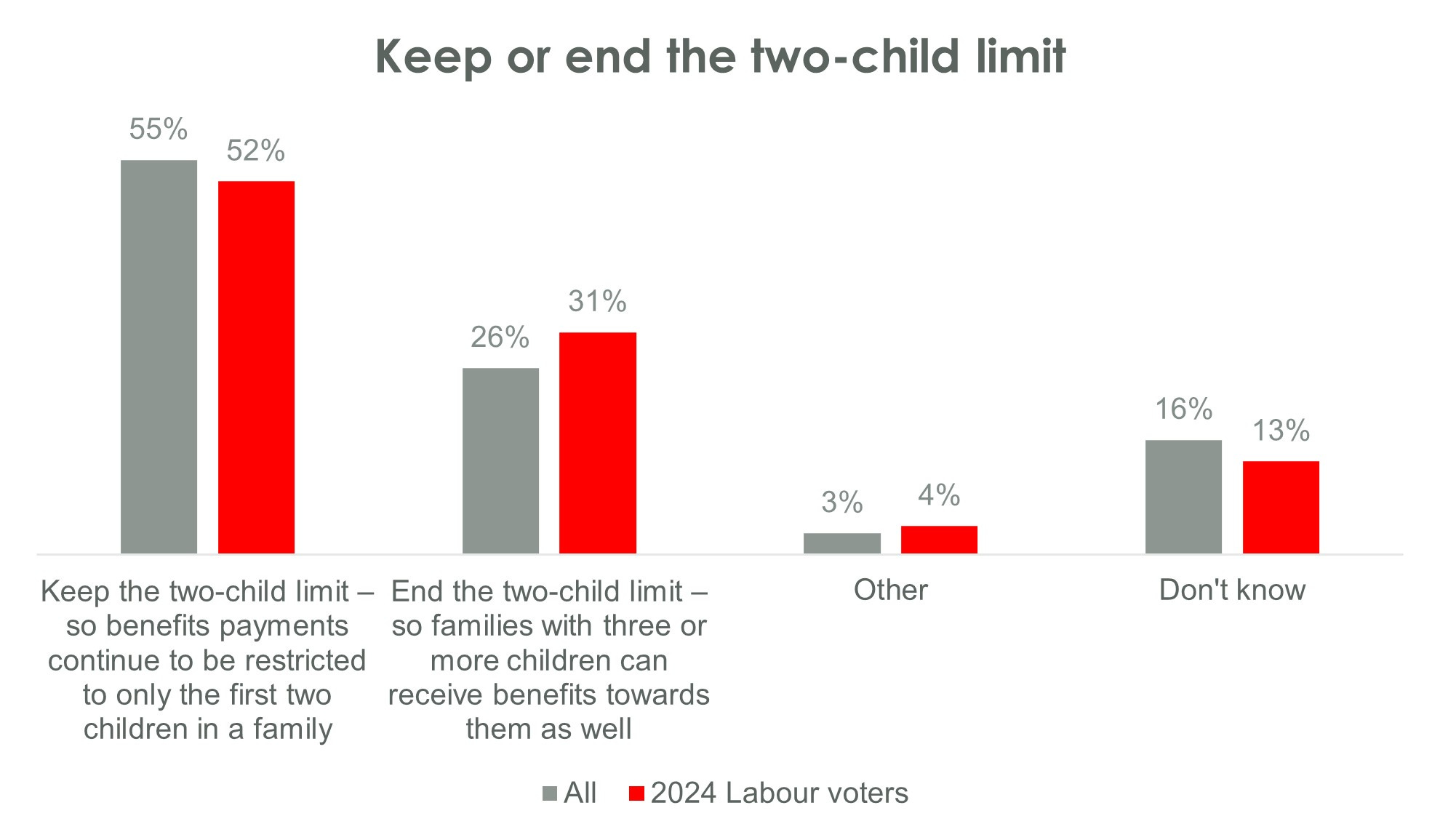
Source: Opinium, August 2024
The text introducing this was:
“Currently there is a ‘two-child limit’ on benefits. This means benefits such as Child Tax Credit and Universal Credit payments is restricted to the first two children in a family, so any additional children do not receive these benefits. What do you think the chancellor Rachel Reeves should do in the budget later on this year?”
In May this year we tried a slightly different formulation that we use with policy questions where you present some of the arguments for and against in the hope of more accurately reflecting the kind of coverage people may be seeing about an issue:
The “two-child benefit cap” is a government policy which prevents most families from claiming means-tested benefits (for example Universal Credit, Child Benefit) for any children after their second child.
· Supporters argue that it encourages families not to have more children than they can afford and that the government cannot afford to pay any more.
· Critics argue that it punishes children for the decisions of their parents, pushes up child poverty, and costs the state more in the long run because of the impact that growing up in poverty has on someone’s life.
Would you say that you generally support or oppose the two-child benefit cap?
This again gives us a broad “keep the cap” response, and one in which 2024 Labour voters are slightly more opposed to it but generally in line with the national picture.
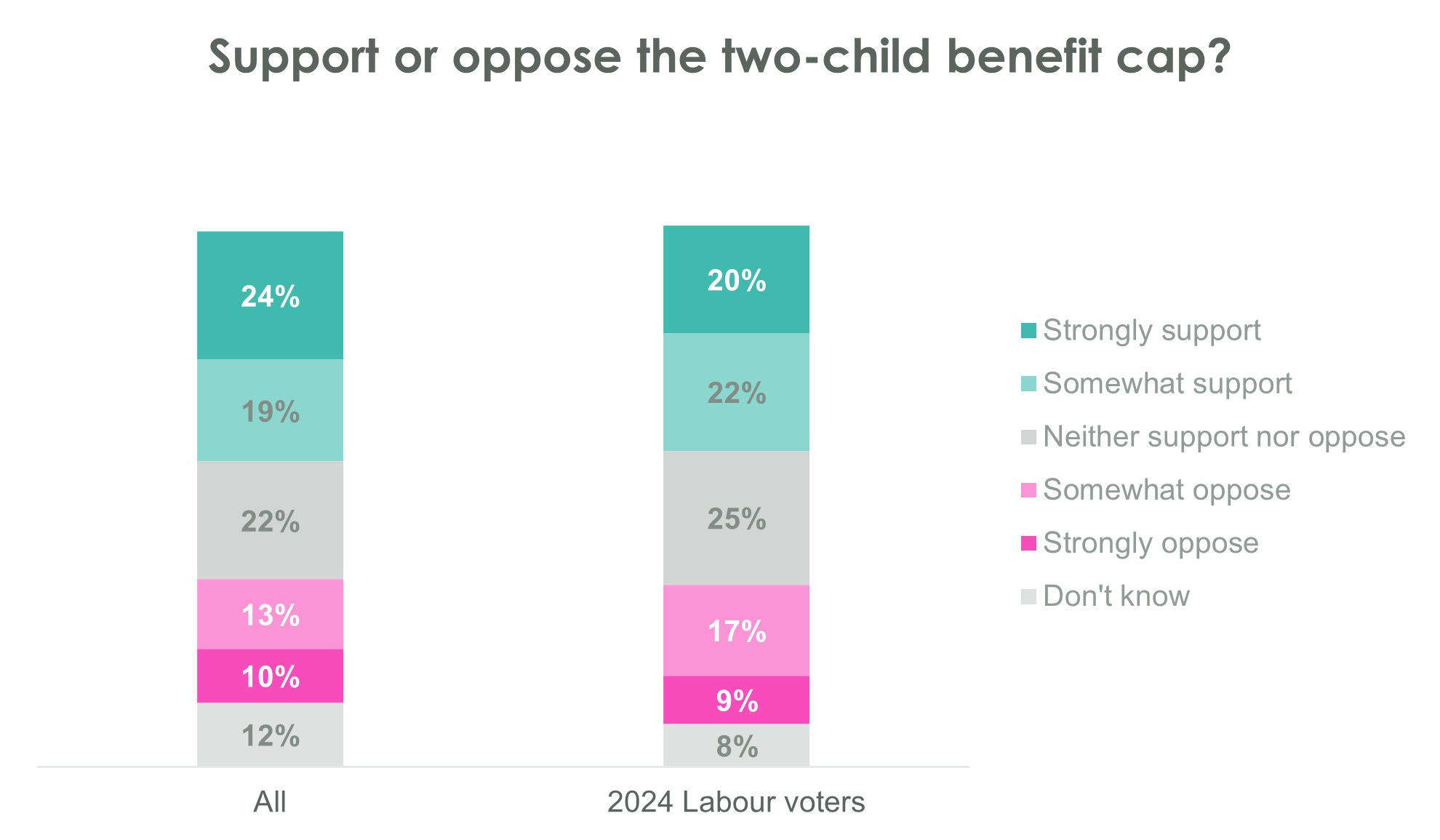
Source: Opinium, May 2025
For context, 37% and 38% of 2024 Tory and 2024 Reform voters respectively said “strongly support”.
Obviously it’s possible to support or oppose the gap for different reasons. Some within the Labour camp support it for moral reasons of work ethic but the general tenor you would expect is that it’s painful but necessary. We tried to get at some of that in another question.
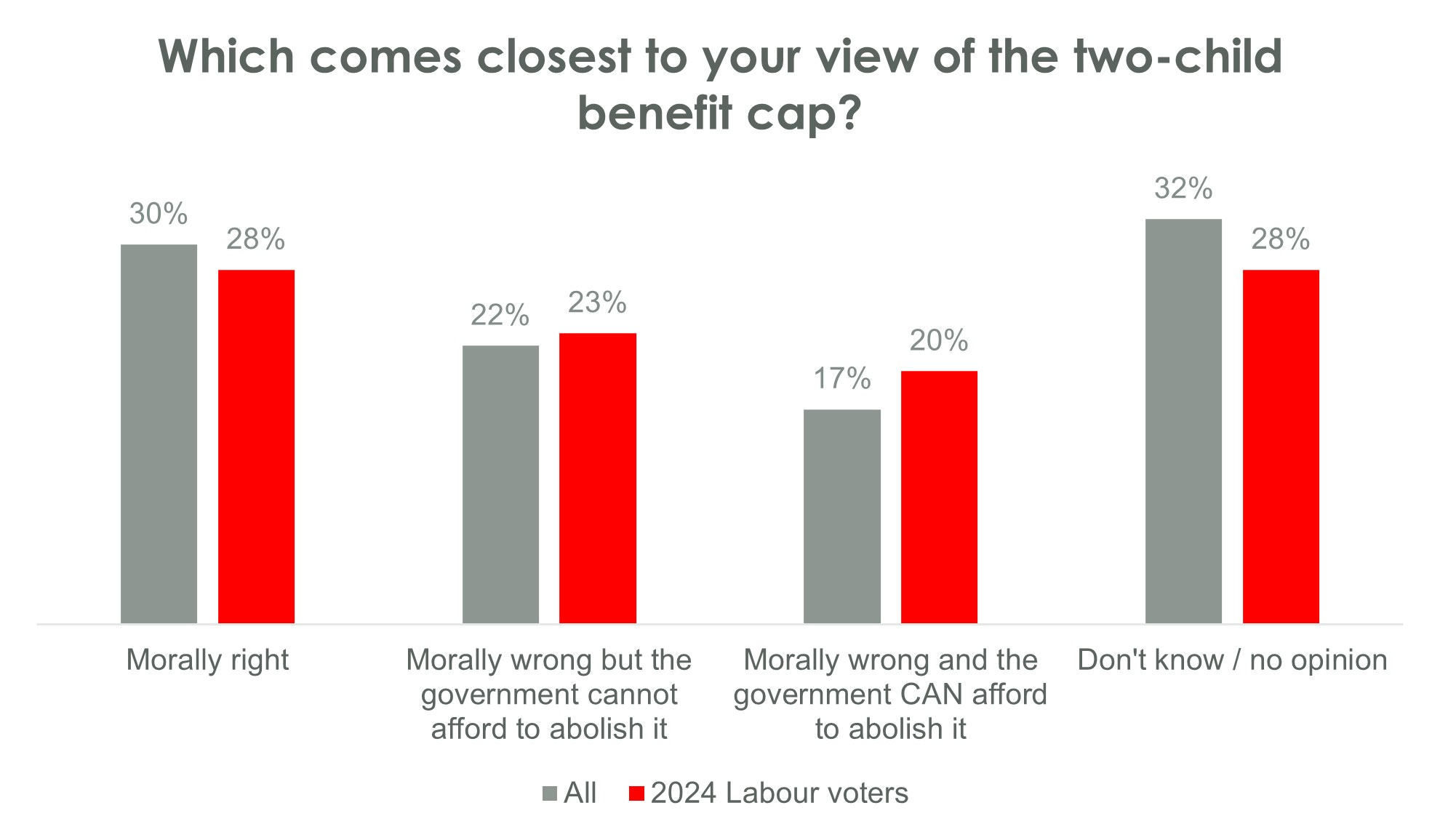
Source: Opinium, May 2025
Labour voters’ 28% “morally right” figure pales in comparison to 47% among 2024 Tories and 44% of 2024 Reform voters, but isn’t that different to the national level. One way of looking at these numbers then is that people either think the cap is a good thing or that it’s an unfortunate necessity but, either way, there is not a majority for removing it.
The other view though is that things like this are not decided by a referendum, that these numbers are very soft, and that if the government wanted to remove the cap then that is a fight that they could win.
Support of the cap in the abstract is mostly among those that voted for parties of the right and a plurality believe that the cap is morally wrong with large numbers in both questions giving a neutral view and potentially open to persuasion.
It’s a cliché at this point but Tony Blair’s “3-second, 30-second, 3-minute” conversation really is a good way of thinking about research and polling when it comes to policy.
The polling industry standard is that a respondent will take about a minute to do 3 questions, so you have 20 seconds for people to read your information, read the answers and make a decision. In reality people answer even faster than this. Imagine trying to explain the benefits system and this policy to someone afresh in 20 seconds and how you would treat that response. It’s important then to think about what outcomes people want rather than just how they react to possible methods of achieving them.
This is where this becomes less of a data-led article and more speculative but searching for results in our polling about views of poverty, and child poverty in particular, has revealed just how little we ask about it just because the answers are assumed: Of course it’s bad, of course people facing destitution should have some support, the question is then about affordability and it’s better to ask about it in questions about broader feelings on tax and spend.
The closest we have though is a question from March this year asking about the amount of state support available to different groups:
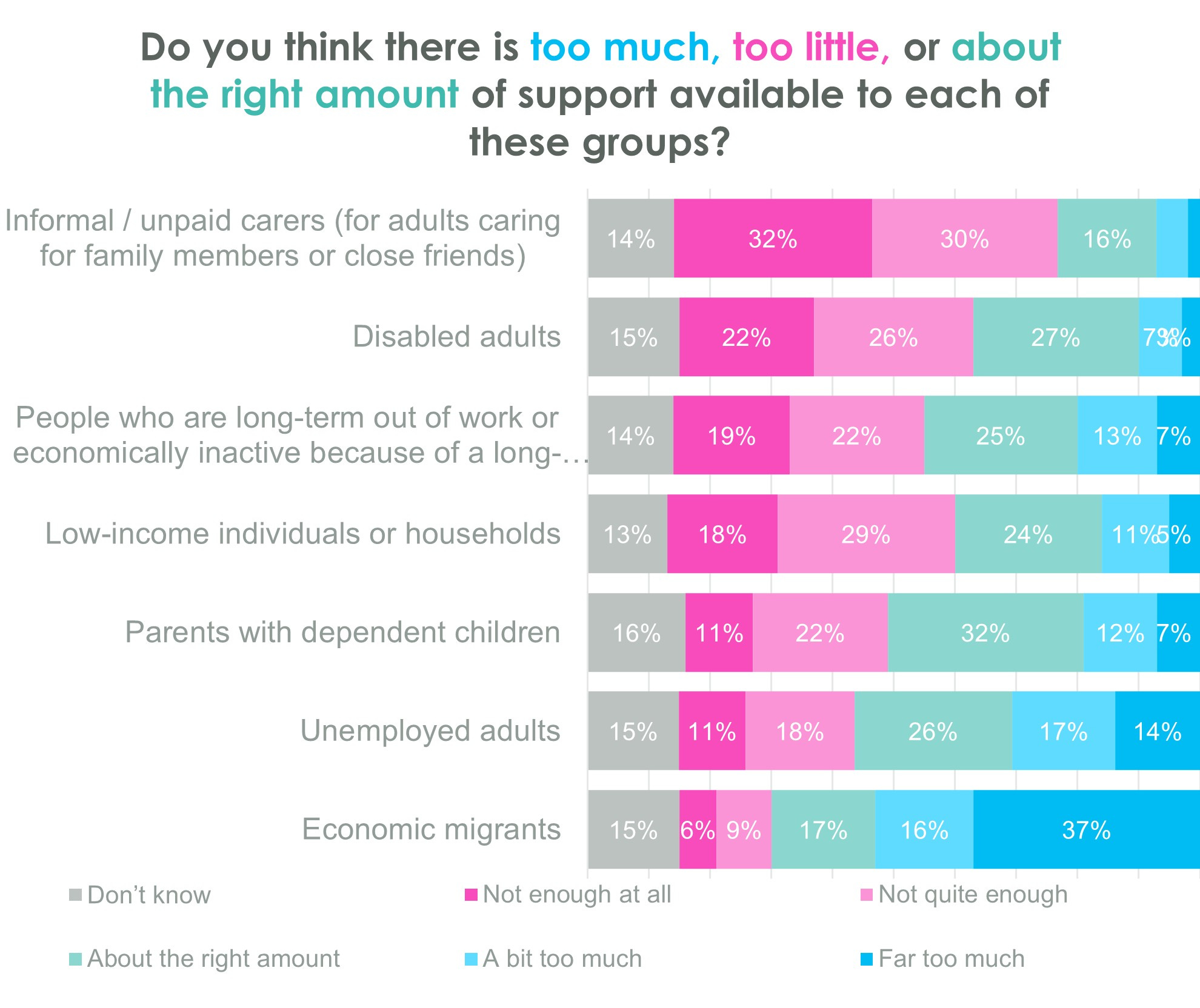
Source: Opinium, March 2025
The takeaway from a chart like this is that people feel that all sort of disadvantaged groups are struggling and, aside from where they can in some way ascribe their situation to personal choices, need help.
The two groups most of interest for this discussion are low-income individuals or households, and parents with dependent children. They are low down in the list compared to informal carers and disabled adults, but fit the general picture and one piece of information that we did not include when asking about the two-child benefit cap is that 59% of parents affected by it are in work. If we are still stuck in cliches about strivers and skivers then the fact that this policy affects the strivers should at least open the door to discussion, before we even get into the points about the long term cost to the state and society of children growing up in poverty.
People did not elect Labour for Rachel Reeves to be George Osborne. The most damaging approval figures for Starmer and Reeves are not their toxic ratings among Reform voters but their middling ratings among people who voted for them last year many of whom are questioning what a Labour government is for. It’s a cliché that voters support more spending and oppose the tax rises to pay for it but we do seem to give far more weight to the latter finding than the former. Really though, what voters judge governments on is outcomes rather than process and the government shouldn’t let perceptions of process hold them back from better outcomes.
As seen in Lansons-Opinium Political Capital.
See the data tables here for the latest fieldwork (28th - 30th May 2025).